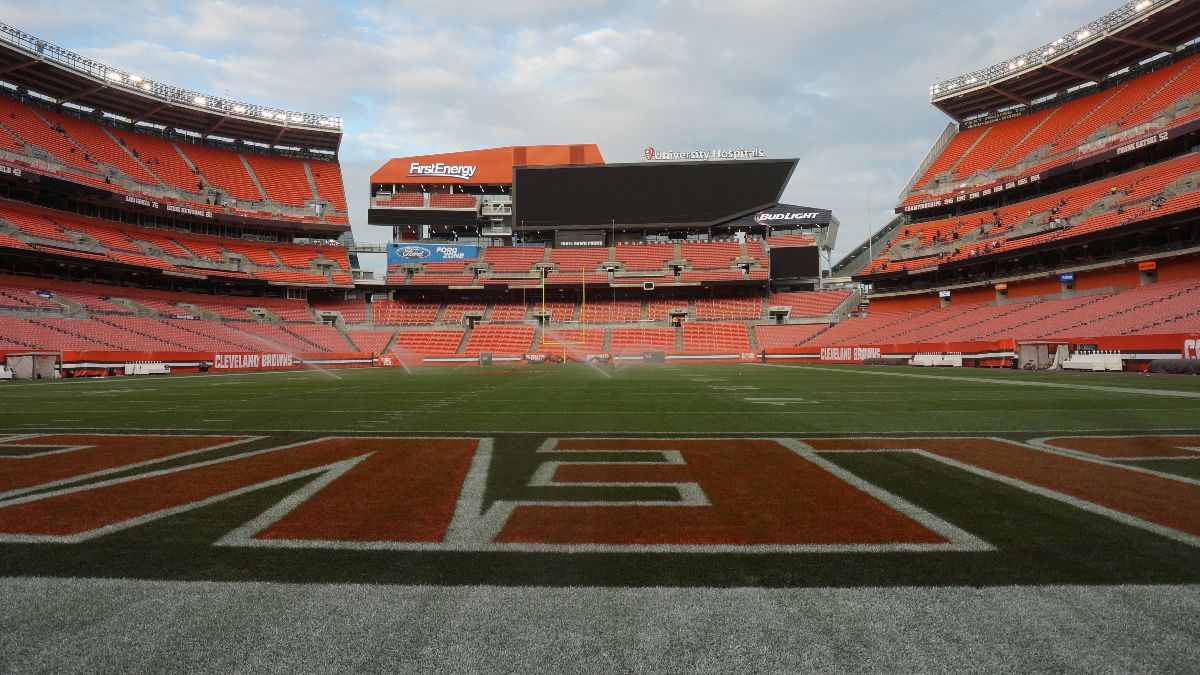
In a moment meant to close one chapter, Cleveland Browns general manager Andrew Berry quietly opened another on Monday, January 6.
Standing before a packed room of reporters following the dismissal of head coach Kevin Stefanski, Berry addressed the obvious questions about the franchise’s direction. The room was heavy. Change always is. But when the conversation turned to quarterback Shedeur Sanders, Berry’s tone softened — reflective, careful, unmistakably invested.
There was no grand declaration. No coronation. Just something rarer in the NFL: patience.
Shedeur Sanders and the Cleveland Browns
Sanders, selected in the fifth round after a steep and widely discussed slide in last April’s NFL draft, arrived in Cleveland without guarantees and without noise. What followed, Berry suggested, was a season of steady, often quiet growth — the kind that doesn’t dominate headlines but matters deeply inside a building.
“I think we saw a lot of progress with Shedeur this year,” Berry said. “I think that’s both mentally, physically, playing the position.”
In a league that chews through quarterbacks with breathtaking speed, Berry’s words landed as something more than a routine evaluation. They sounded like belief — cautious, earned belief.
Berry acknowledged what everyone knows: rookie quarterbacks are unfinished by design. They arrive talented, raw and often overwhelmed. Sanders, he said, was no different. But he also wasn’t stagnant.
“He’s still very much a work in progress, like many rookie quarterbacks are,” Berry said, “but I think we saw some really good things in terms of his play-making, his accuracy, his ability to extend plays with his feet.”
Those qualities — play-making, accuracy, mobility — are currency in today’s NFL. They are also traits that don’t always survive the jump from college hype to professional reality. Berry’s assessment suggested Sanders didn’t just survive it. He learned from it.
The evaluation wasn’t limited to highlights or raw tools. Berry emphasized growth in the unglamorous parts of quarterbacking — the parts that separate potential from reliability.
“I think I would also give him credit, along with our offensive staff, for bringing him along in terms of his pocket management, his situational awareness, and things of that nature,” Berry said.
Pocket management doesn’t trend on social media. Situational awareness doesn’t sell jerseys. But for quarterbacks trying to build long-term careers, those skills are oxygen. Berry’s praise carried the weight of someone watching the small things, the daily repetitions that don’t make highlight reels but decide Sundays.
There is context here, too. Reports have indicated Berry himself was instrumental in pushing for Sanders’ selection during the draft, even as the quarterback’s fall stretched far longer than expected. That kind of advocacy doesn’t guarantee opportunity — but it does invite scrutiny. Berry did not dodge that history. Instead, his comments suggested a front office comfortable standing by its evaluation.
This was not the language of a general manager distancing himself. It was the language of someone explaining a process — and seeing returns.
The Browns, of course, are navigating turbulence. Coaching changes always ripple outward, raising questions about scheme, philosophy and fit. Quarterbacks, more than any other position, feel those shifts acutely. Berry did not speculate about roles, depth charts or timelines. He didn’t need to.
Instead, he framed Sanders’ future the way organizations often say they want to — but rarely do.
Development over urgency. Progress over panic.
What Makes Shedeur Sanders Stand Out
For Sanders, that framing matters. He entered the league carrying expectations shaped as much by his name as his résumé. Draft weekend stripped those expectations down to something simpler: a chance. Berry’s comments suggested Sanders has done something with it.
There was no promise of a starting job. No declaration of a long-term plan. But there was respect — and in the NFL, respect is currency, too.
Berry’s tone was neither defensive nor promotional. It was steady. That steadiness may be the clearest indicator of where Sanders stands right now: not crowned, not dismissed, but firmly in the conversation.
In Cleveland, that’s not nothing.
Quarterback development is rarely linear. It’s marked by pauses, leaps and occasional backslides. Berry acknowledged that reality without apology. Sanders, he made clear, is still learning — but learning the right things.
As the Browns move forward from a coaching change and into another period of evaluation, Sanders’ story remains unwritten. Berry did not try to finish it for him. He simply acknowledged the chapters already drafted.
Progress. Growth. Promise.
Sometimes, in a league addicted to instant answers, that’s the most honest thing a general manager can say.